
To understand human behavior and opinions on many different topics, it is useful to examine how these behaviors and opinions affect a person's sexual market value. This theoretical lens helps explain much apparently altruistic and irrational behavior, especially in younger people.
Male teenagers may engage in extremely dangerous motorcycle races, claiming it is merely for the thrill of speed, when in reality, it may be driven by a desire to impress potential mates.
In wars, young men may be willing to die as heroes, if only to posthumously secure a legacy that enhances the status and reproductive prospects of their kin.
For women, the dynamic is similar. They may adopt roles that are contrary to their physical well-being if they believe it enhances their sexual market value.
Some individuals seek to reap the benefits of a high sexual market value and actively wish to engage in sex. For others, however, sex can become a theoretical concept. If they believe that remaining virgins for life yields the highest sexual market value, they may choose to abstain.
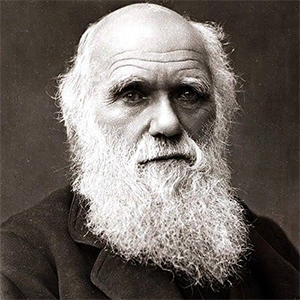
(1809-1882)
He explained this through the concept of sexual selection, as an adjunct to natural selection.
However, evolution, including the evolution of human behavior, has never been as strictly logical as theoretical natural selection. Oftentimes, it is driven by random processes, such as genetic drift. The results of this random selection, in conjunction with sexual selection, may prevail for a certain period until environmental changes eliminate them.
From a distance, natural selection may seem directional and predictable. But for organisms as complex as animals, over shorter observed time spans, one observes seemingly non-adaptive sexual selection at work.